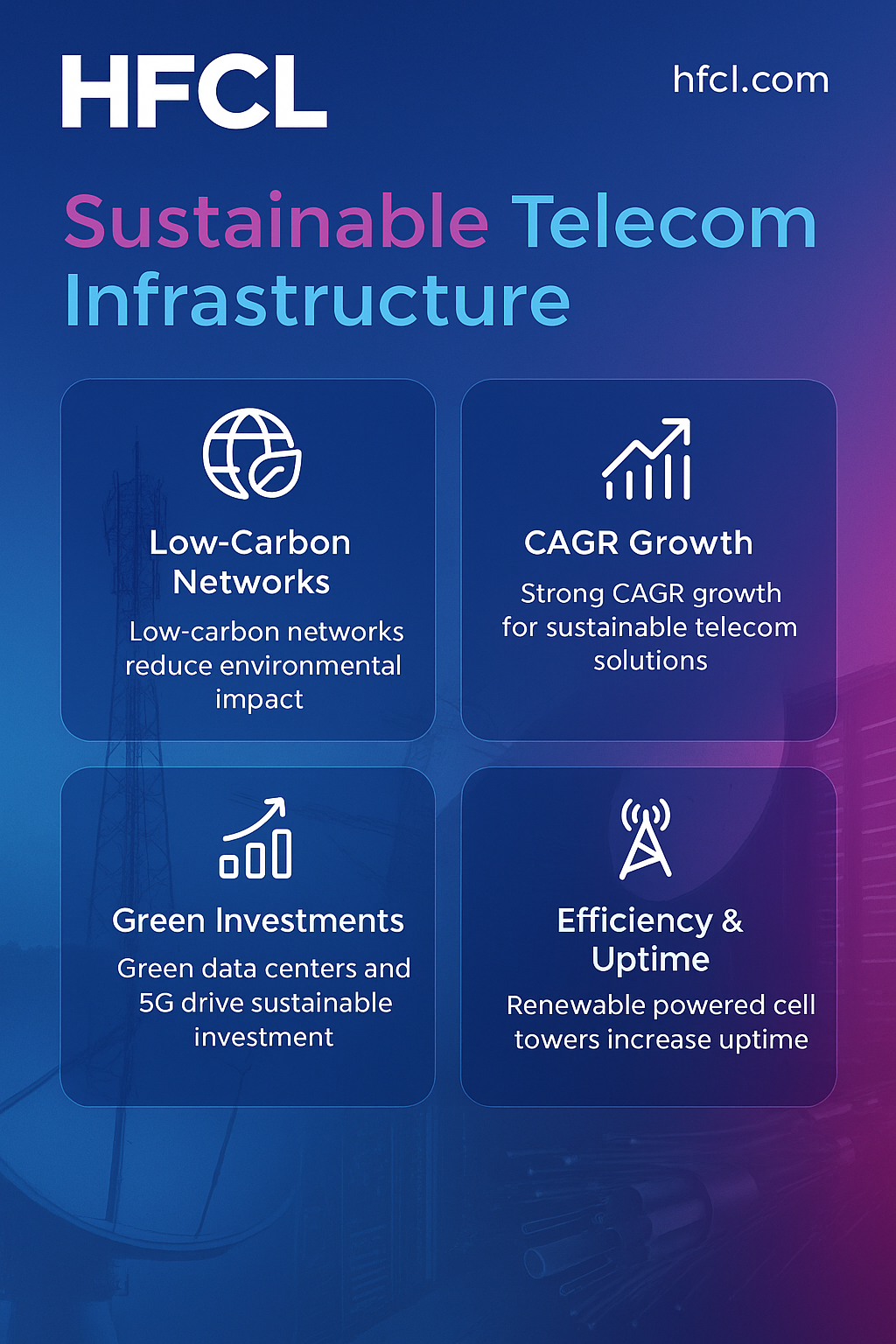
Sustainable Telecom Infrastructure: Building Environmentally Responsible Networks
Sustainable telecom infrastructure reduces environmental impact while keeping networks resilient and cost-effective. This article explains what it is, why it matters, how it works, its benefits, real-world examples, challenges, and future trends for operators and regulators. Industry reports indicate sustainable network investments and renewable integrations are driving a multi-billion-dollar market as operators pursue lower energy consumption per bit and regulatory compliance.
Introduction
Telecom operators worldwide are shifting from carbon-intensive builds to low-carbon, resilient networks to meet regulatory pressure and rising energy costs. This article covers definitions, technical building blocks, business benefits, real-world implementations, and future forecasts for sustainable telecom infrastructure. Examples range from renewable-powered cell towers in the US to fiber deployments and eco-friendly data centers in the EU and UK. Recent market research projects high CAGR growth for sustainable telecom solutions as 5G expansion and green data centers accelerate investment.
What is Sustainable Telecom Infrastructure?
Sustainable telecom infrastructure means designing, building, and operating network assets with minimized environmental impact, higher energy efficiency, and lifecycle planning for materials and waste. Industry definitions emphasize reducing carbon footprint through energy-efficient equipment, renewable power integration, and circular supply-chain practices. The approach covers sites (cell towers, base stations), transport (fiber optics, microwave), and compute (edge and data centers) while meeting standards and reporting frameworks promoted by bodies such as IEEE and sector guidance.
Why Sustainable Telecom Infrastructure Matters Today
Sustainability is now a business and regulatory imperative: operators face investor, customer, and regulator demands to cut emissions while managing rising energy costs and traffic growth. Market reports estimate rapid expansion in sustainable telecom investment driven by 5G rollouts, green data centers, and renewable integrations, supporting a strong CAGR for the segment. Lowering energy per bit and meeting net-zero targets also reduce operating expenses and financing risk for carriers.
How It Works
Architecture
Distributed, modular networks: small cells, edge compute, and fiber backhaul reduce haul distances and enable localized energy management.
Hybrid power architecture: grid-connected sites with on-site renewables (solar/wind) plus battery/backup systems for resiliency.
Technologies Involved
Energy-efficient radio units, sleep modes, and dynamic site power management reduce consumption.
Fiber-optic transport and network virtualization lower latency and permit consolidation of hardware, improving efficiency.
Battery energy storage and smart inverters enable renewable-powered cell towers and smoother integration with the grid. Technical standards and IEEE sustainability initiatives guide design choices and interoperability.
Key Benefits of Sustainable Telecom Infrastructure
Lower operational costs: energy savings from efficiency measures and renewables cut OPEX over time.
Reduced emissions: carbon footprint reduction strategies (energy mix shifts, optimized site design) help meet corporate net-zero goals.
Improved resilience: on-site renewable power and storage increase uptime at remote sites and support disaster recovery.
Regulatory and financing advantage: greener assets meet tightening compliance requirements and can unlock favorable investor terms.
Better public image and customer demand alignment: sustainability features influence procurement and RFP decisions. Evidence from operators shows significant Scope 2 reductions after renewable sourcing and green tariffs.
Real-World Use Cases
Renewable-powered cell towers US: Operators and towercos in North America are piloting solar + battery at rural base stations to reduce diesel genset use and operating costs.
Green telecom infrastructure UK: Major UK carriers have shifted to renewable energy procurement and green tariffs, reducing Scope 2 emissions substantially.
Fiber optic sustainable deployment UK: Urban fiber deployments using trenchless techniques and lifecycle planning lower construction emissions and waste in UK rollouts.
Eco-friendly data centers telecom EU: Telecom cloud and data center operators are investing in low-PUE designs and sourcing renewables to support network workloads. Each case aligns with industry sustainability roadmaps and published operator initiatives.
Challenges, Best Practices, and Solutions
Key pain points include high upfront capex for green retrofits, regulatory fragmentation across regions, and fragmented standards. Best practices include lifecycle-oriented planning, digital twin/site digitization to reduce truck rolls, and co-investment in renewable generation to scale supply.
Future Trends
Analysts forecast continued investment in green network design, with the sustainable telecom infrastructure market expanding strongly as 5G densification and data center decarbonization proceed. Expect more operator co-investment in off-site renewable generation, AI-driven energy optimization, and standardization efforts (e.g., IEEE initiatives) to accelerate adoption and lower energy per bit.
Industry Impact
Major vendors and tower companies are launching energy-efficient equipment and green programs. Vendors contribute through fiber, passive infrastructure, and turnkey green site solutions that enable sustainable rollouts, while towercos and operators adopt renewable site power and energy management platforms. Company announcements and product roadmaps reflect this shift toward integrated sustainability offerings.
Conclusion
Sustainable telecom infrastructure is central to modern network strategy—cutting costs, meeting compliance, and reducing carbon while supporting growth in data and 5G services. Operators that adopt renewable-powered cell towers and energy-efficient telecom sites in EU/US strategies will be better positioned for regulatory and market demands.
FAQs
1) What is the fastest way for a carrier to reduce its telecom carbon footprint?
Adopt energy efficiency measures (sleep modes, efficient radios), switch to renewable energy for Scope 2 emissions, and optimize network architecture to reduce redundant hardware and energy per bit.
2) Are renewable-powered cell towers reliable for rural coverage?
Yes—solar plus battery systems can reliably power rural sites, reducing diesel dependence; careful sizing and hybrid/grid integration ensure uptime and cost savings.
3) How does fiber optic sustainable deployment in the UK reduce emissions?
Using directional drilling, minimizing excavation, and planning routes to reduce material use and truck rolls lowers construction emissions and lifecycle environmental impact.
4) Do eco-friendly data centers for telecom in the EU increase latency?
Not necessarily—edge placement and modern cooling designs maintain performance while lowering PUE; proper architecture balances sustainability with latency requirements.
5) What compliance should UK operators watch for in sustainable deployments?
Operators should track national net-zero targets, reporting requirements, and telecom infrastructure sustainability compliance UK frameworks and align procurement and reporting to meet those standards.
 Growsatck.ai
Leave a comment